
Our Lady of Grace:
A Reflection on Compassion and Presence
Stuart Higginbotham
Images matter. Image, on one level, can be a superficial thing when we focus only on outward appearance, seeking to fit into a mold or gain approval. Image, on a more profound level, is a way to engage the dynamic truths that draw our souls to reflect and gauge on the meaning of life. Human beings have drawn to the potential of images to describe the great mysteries of life since we first drew cave paintings on walls by firelight. Sometimes words fall short, and an image can better approach the questions we carry inside.

Cave painting at Lascaux, France, c. 15,000 BCE
Images used to convey spiritual meaning offer a complex challenge because our image of the Divine and our images of ourselves are entangled–and evoke quite serious implications around power in society. When it comes to how we imagine that dynamic reality and source of existence we call God, it is easy to project an image of ourselves writ large onto the heavens. We begin to imagine God as an idealized version of ourselves, and once that image is in place, maintaining that image of God allows us to maintain the images we have of who has power in community.

“Creation of the sun, moon, and planets,” Michelangelo, Sistine Chapel
Over time, we see in Christianity how the image of God became quite fixed as that of an older, white man. This makes sense when we think of the dynamic of European colonial power during the Middle Ages and into modern times. If the ones who conquered projected an image of themselves onto the Divine, then those who were conquered were challenged to think of the Divine as looking like those who had power. Further, those who had grasped power came to believe that their status was, in fact, mandated by the Divine. The image conveyed in artwork–and in the norm of mental constructs of the Church–reinforced the sense of who was meant to have such power. Hence, the image settled into a loop that supported a certain–and unfortunate, in hindsight–social and religious power dynamic.
There was a point in the Byzantine Empire (the late Eastern Roman Empire which continued in some form after Rome was conquered in the 5th and 6th centuries), where the use of images was suppressed. The so-called iconoclastic controversy in the 8th and 9th centuries sought to restrict the use of images when it came to religious art on the grounds that it was far too easy to begin worshiping the images themselves rather than worshiping God. The Byzantine Empire openly struggled with the complexity of human tendencies, while the remaining Church in Western Europe continued to employ the use of images and art (being rooted in such a Greco-Roman aesthetic). But even with this resistance in the Byzantine Empire during this time, the need to engage with images was so strong. Eventually, the Byzantine Church returned to using images, albeit with a more formalized style that we see in the now-familiar icons.
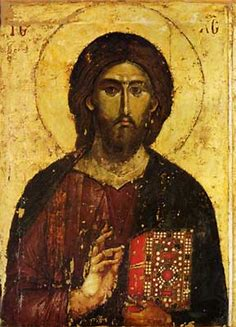
Christ, the Pantocrator, 16th century
While it is obvious that most of the images used to depict God are male, we also see a deeply meaningful tradition of portraying the Blessed Virgin Mary in artwork. From the most ancient days of the fledgling Christian community, the presence of the Mother of Jesus inspired compassion and mercy–and also a fierce dedication and presence.
Artwork, from paintings to statues to iconography, by countless artists has sought to convey a sense of devotion to the Blessed Mother, and we see how the image of Mary–a strong, faithful, compassionate, female presence–has made its way into cultures around the world. There is a deep awareness of the Divine Feminine that arises within cultures, inviting us to ground ourselves in an image of the Divine that fosters compassion and wholeness.

Our Lady of Guadalupe
Images do matter, because they provide us with a space for reflection and devotion that nurture a transformation of our hearts. And, with transformed hearts, we can live in the world in a more faithful way, recognizing the presence of Christ in the world around us. The spiritual meaning of images, then, is not to reinforce our own grasping for power and control; rather, images challenge us to see how God is calling us to empty ourselves and thus live more fully aligned with God’s dream for the world.
Images also speak to us at certain times in our personal and communal lives. They challenge us to see the world a different way, and they offer a space where we can look past narrow and constricting worldviews to ones that nurture healing and wholeness. This is where we find ourselves as a global community now, and I am grateful for the opportunity we have to reflect on a new piece of public art now held on Grace’s campus.
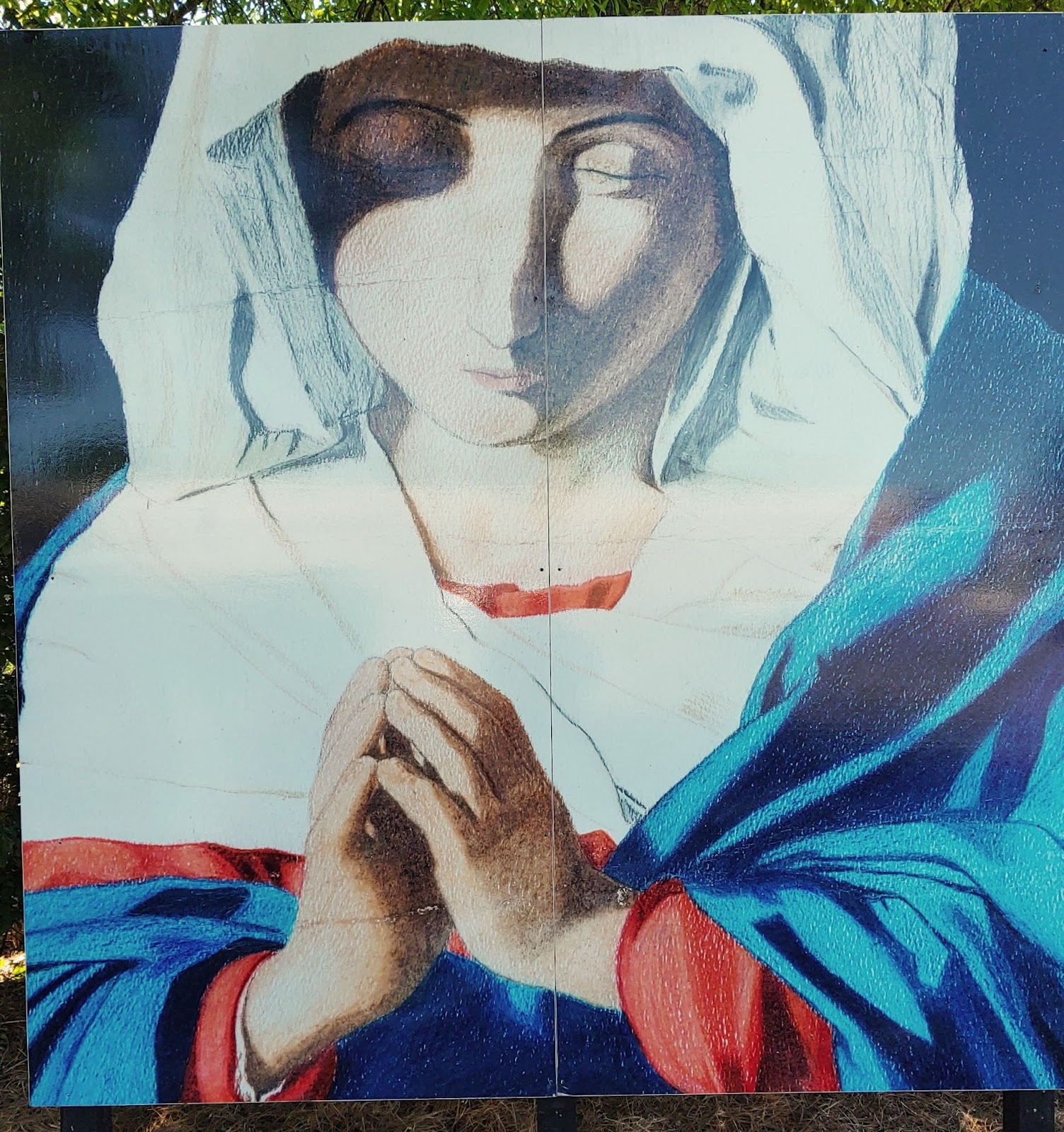
I have taken to calling her Our Lady of Grace, and she arrived just last week as part of the ongoing public work project with the City of Gainesville. You can see other examples of the extraordinary public art around the city, and it is a wonderful way that artists in the community have been able to enrich our common life. The painting now sits in the corner of our campus, nestled under an oak, beneath a street light so she can even be seen at night. It is an eight-foot by eight-foot panel that welcomes you every time you come to the office side of the campus. It is an image of grace that invites us to renew our awareness of compassion and presence in challenging times.

Our Lady of Grace
The original painting was done by a local highschool student, and I am working to find a way to recognize them, to thank them for their gift. What inspired them to paint her, when their options were endless?
I am very grateful that we can share in the public art project with our community, and I am honored that this incredibly beautiful image now has a home on our campus. It is an example of how an image can nurture our practice of prayer and call us to pause and breathe in God’s goodness. I hope you will take the time to visit Our Lady of Grace and see how this beautiful work of art can strengthen your devotion.
 Thoughts on a Contemplative Reformation
Leave a comment